
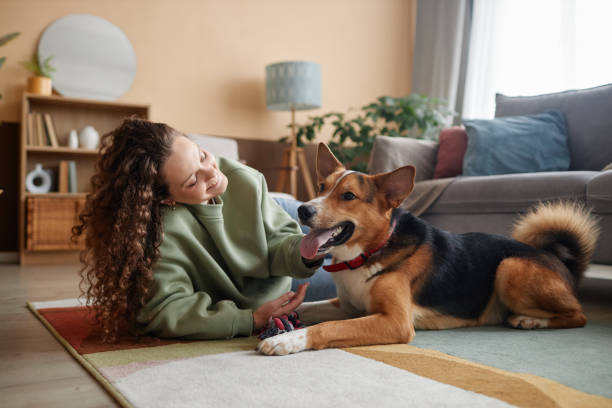
Owning a pet can start with a lot of enthusiasm, fluffy hair and grandiose. One says, I always wanted to have a pet, and all of a sudden there is a puppy in the living room or a cat behind the refrigerator. It feels right. It feels joyful.
But, under that happiness, is a silent fact new pet owners have not yet fully realized. It is one thing to love a pet and quite another thing to take proper care of a pet. I can observe the same trends as I am a pet lover and am the teacher of other pet lovers. Frequently. Almost predictably. And honestly? I am still astonished by the amount of useful information that is unknown or misapprehended.
So let’s slow down. Let’s talk openly. Before it becomes a mistake, a regret, or a rehoming, then let’s correct the mistakes. Ready?
- Adopting a Pet Without Thinking of Lifestyle Fit.
This is one of the most frequent errors that occur even before the pet is brought home. Most of the new owners are selecting pets by appearance and trends or out of emotion.
That long-tailed dog is peaceful in photographs. It is a exotic pet that appears special online. That kitten does not appear to be much of a maintenance. But beware animals do not exist in pictures or descriptions. They exist in time, space, noise, routine and energy.
Dogs that are of high energy need to exercise and be stimulated on a daily basis. Some cats always require attention. There are pets that are able to live in quiet homes and those that are more tolerant to chaos.
Logically ask yourself, Does my day-to-day lifestyle work with the needs of this animal or am I wishing this animal to adapt to mine?
Hope is not a care plan.
- Minimizing the Actual Time Devotion.
Pets do not fit into your free time. They restructure your life entirely.
Dogs need to be walked on a daily basis, trained, fed on a regular basis, groomed and socialized with. Cats should be able to play, have litter boxes and environmental enrichment. Even reptiles and fish require regular care and attention.
It has been scientifically proven that animals perform best when subjected to a routine. The unusual timetables tend to result in stress behaviors.
Stop and think a second: Am I ready to take responsibility on a day-to-day basis with no breaks, excuses, and short cuts? Since pets do not have a weekend off.
- Postponed Training and Socialization.
Most new owners do not train their pets immediately due to the apparent smallness, harmlessness, or too young of their pets. Unluckily, habits are made at a young age, either followed or neglected.
Training is early based to build communication, confidence and safety. The puppies that fail to get the provided socializing windows are likely to develop fear-based behaviors in future. Kittens not handled softly will grow up to be defensive.
Positive reinforcement training has been established to be more effective compared to the punishment-based techniques. It enhances the level of trust and decreases anxiety.
It is time saving to train young. Always.
- Eating Bad Diets and Bad Measures.
Food errors occur silently and they are devastating. Feedback on the feeding of children; whether it is overfeeding, underfeeding or feeding on the wrong foods, has health repercussions that are long term.
Obesity is one of the most widespread preventable health issues with pets all over the world. Veterinary studies have shown that overweight pets are at risk of contracting diabetes, heart disease, arthritis, and reduced life span.
It is easy to mix affection and additional treats with many owners. Nevertheless, pets do not need the help of excess calories, but rather consistency to feel loved.
A wise question to ponder on is; Am I feeding my pets, or my feelings?
That difference is more than any one thinks.
- Procrastinating Veterinary Care to Emergencies.
A pet that seems to be healthy may be harboring a disease. Pain is natural to conceal in animals. And it is survival rather than a trait of resilience.
Regular check-ups to the veterinary will enable the disease to be detected early, prevent parasites, vaccination, and nutritional advice. The cost of preventive care is much lower than that of emergency treatment.
Missing veterinary appointments causes timely diagnosis, unwarranted pain and even financial costs.
Periodic examinations are not by choice. They are essential.
- Not Pet-Proofing your Home or Environment.
Human-designed homes have uncountable risks to animals. There is a danger of electrical cords, cleaning chemicals, toxic plants and unsecured trash bins.
Young pets gnash their teeth, dig their nails and probe. The aged pets might also develop mobility or sight problems that result in accidents.
The pet-proofing minimizes injuries, poisoning, and stressful behaviours.
A very good place to start is asking yourself if there is any danger here, which my pet is not aware of or understands?
If there is any, then remove it.
- Demanding Instant emotional connection.
Movies cause unrealistic expectations. Real relationships are time consuming even with pets.
Some animals bond instantly. Others need weeks or months. Attachment styles are predetermined by the past, genetics, and personality.
Coercing love usually causes fear or evasion. Trust is natural, and occurs through respect, patience and routine.
Sit nearby. Speak softly. Allow the animal to take the initiative.
The bonding develops in silence and then it seems to be invincible.
- Reading Pet Body Language The Wrong way.
Pets are always talking but most human beings do not listen appropriately. The information is communicated by tail movement, ear position, posture, vocalization, and eye contact.
The wagging tail is not necessarily a sign of joy. Purring may indicate stress. Ears flattened usually indicate pain and not disobedience.
Misunderstanding results in bites, bites, and broken trusts.
Specific communication of the species decreases the conflict and enhances emotional bonding.
Then always ask yourself; What is my pet telling me now?
The solution tends to be obvious.
- Neglecting Mental Stimulation Needs.
Intelligent animals are not satisfied with physical exercises only. It is also essential to enrich the mind.
Pets that are bored develop destructive behavior, anxiety, and depression. Unmet cognitive needs tend to result in chewing, digging, excessive vocalization and overgrooming.
The brain is stimulated by puzzle feeders, scent games, training exercises and interactive toys. Minor behavioral improvements can be made in as little as ten minutes a day.
A motivated mind produces a peaceful house.
- Treating Pets Like Humans
This is an error that comes as a surprise to many. Having affection for pets does not imply making them human beings.
Pets have no idea of complex verbal explanations, guilt lectures, and emotional inconsistencies. Clarity, routine and non-agitated direction are best received by them.
The effects of anthropomorphism are usually confusion and anxiety among animals. Security is offered by structure, boundaries and predictability.
Love is effective when combined with understanding.
- Lack of Planning Long-Term Responsibility.
Pets are not as short-lived as some new owners would expect. Dogs often live over a decade. Cats are often able to attain the age of twenty. There are birds that live longer than their caregivers.
Life changes happen. Moves occur. Careers shift. Financial challenges arise. Pets are also put at a disadvantage, with lack of planning.
The responsible ownership involves emergency plans, financial preparation, and the future care.
Ask yourself the following one and be honest about it: Am I capable of protecting this pet even in times when life goes unpredictable?
Such a question is commitment.
Final Thoughts From One Pet Lover To Another.
Errors do not qualify someone to be a poor pet owner. Refusing to learn does. Growth is initiated when one is aware.
Pets forgive quickly. They adapt beautifully. They are unconditional in their love.
So learn continuously. Ask questions. Adjust routines. Consult the expert in case of doubt.
And here is one last question to consider; What little can I do today that will make my pet more comfortable or happy?
Start there. Every time.